Step 1: Define Your Production Target
Start by answering key questions:
- What crops will you focus on? (e.g., leafy greens like lettuce, microgreens, herbs, or higher-value items like strawberries)
- What is your desired weekly or annual harvest? Examples:
- Home or small community: 50–200 heads of lettuce per week
- Local market/restaurant supply: 500–2,000+ heads per week
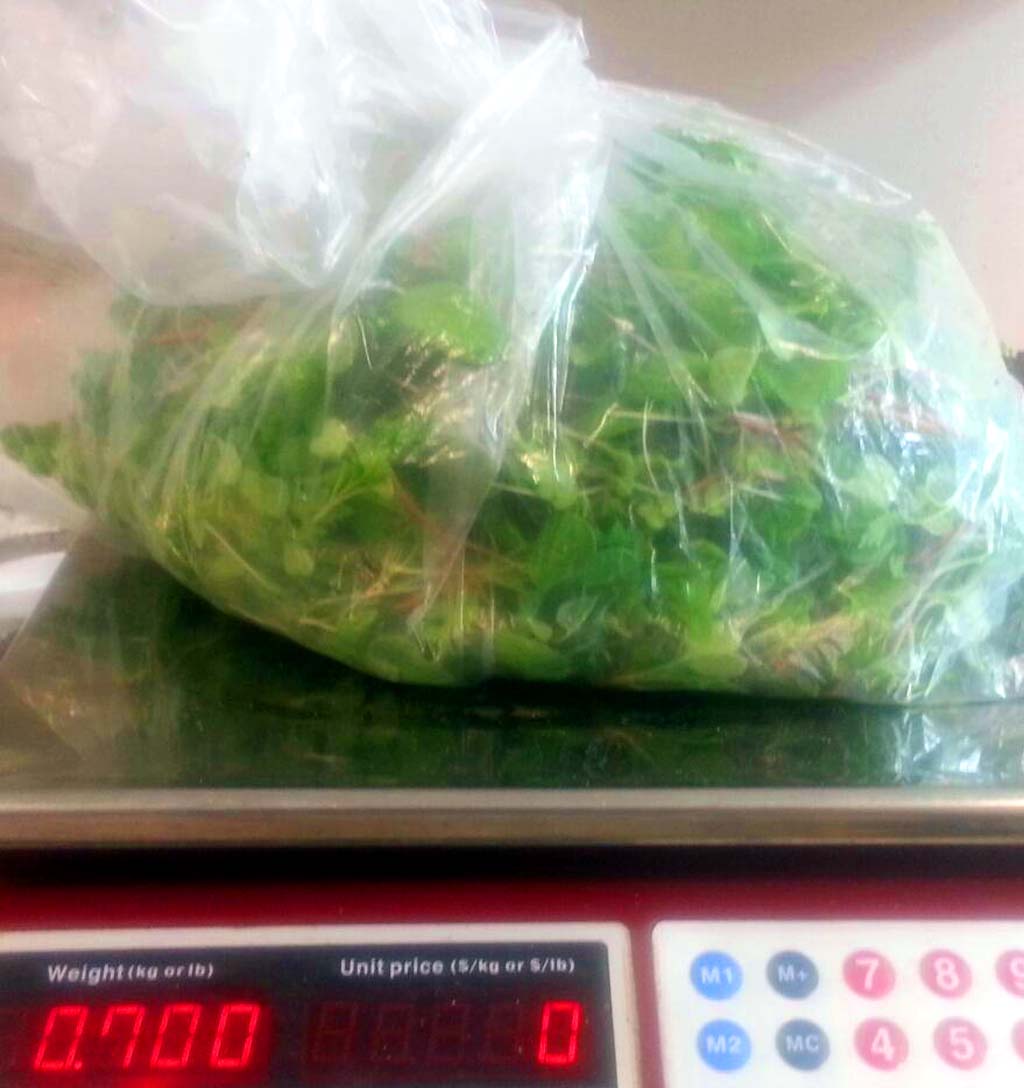
- Commercial startup: 5,000+ heads per week or equivalent in weight (e.g., 100–500+ lbs/week of greens)
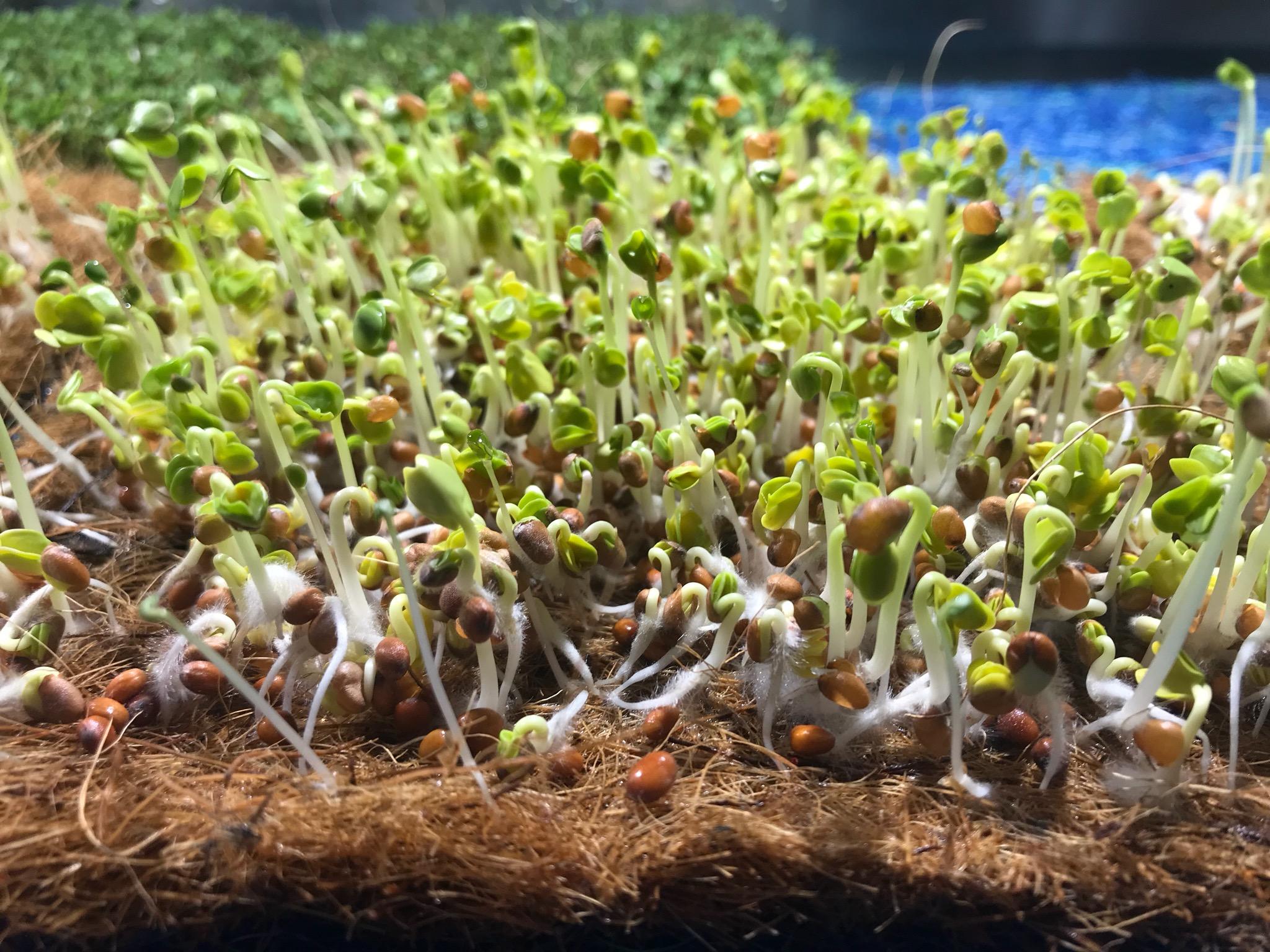
- Factor in harvest cycles: Lettuce often takes 4–8 weeks from seed to harvest, microgreens 7–21 days, allowing multiple turns per year.
Real-world benchmarks for hydroponic/vertical systems:
- Lettuce: ~20–30 heads per square foot per year in optimized setups (higher in vertical stacking).
- Microgreens: Up to 20 lbs per square foot per month in dense trays.
- Vertical stacking multiplies output: Systems can achieve 10× or more yield per floor square foot compared to traditional methods.
Step 2: Calculate the Number of Systems Needed
Use a simple backward-planning approach (inspired by proven hydroponic sizing methods):
- Determine weekly production goal (e.g., 500 heads of lettuce/week).
- Know crop cycle time in the main system (e.g., 5 weeks for lettuce after nursery phase).
- Multiply: Weekly goal × weeks in system = total plant sites needed (500 × 5 = 2,500 sites).
- Divide by capacity per system/module: Our patented Lotus AgTech pans/trays typically support dozens to hundreds of plants per unit, depending on configuration (e.g., stacked arrays with series nutrient flow).
- Add buffers: Include 10–20% extra for losses, staggered planting, or expansion.
Example Scenarios:
- Small startup goal: 100 lbs/week of leafy greens
→ Might require 4–8 stacked Lotus systems (e.g., modular pan arrays covering ~200–400 sq ft floor space with vertical layers). - Mid-scale goal: 500 heads/week lettuce
→ ~2,500 plant sites → 10–20 Lotus AgTech modules in vertical racks (scalable with our patented cooling and spectral lighting for higher density/efficiency). - Larger ambition: 5,000+ heads/week
→ 25,000+ sites → Multiple arrays (e.g., 50+ units), integrated HVAC, solar power, and AI controls for full CEA optimization.
Vertical integration with our innovations (US11617316B2 for solution-cooled LEDs and US12349638B2 for lifecycle-tuned 285–760 nm spectra) boosts yields by enabling denser planting, faster cycles, and energy savings—often reducing the number of units needed compared to standard setups.
Step 3: Why Scale Matters for Your Startup
- Too small: Limits revenue and misses economies of scale (energy, labor, nutrients).
- Too large: High upfront costs (you cover parts/labor in our model), operational complexity, and market risk.
- Right-sized: Matches your budget, space, and sales pipeline while leveraging our patented efficiency for faster ROI.
Our modular, AI-optimized systems make scaling straightforward—add units as demand grows, integrate solar for cost control, and use precise HVAC for year-round consistency.
Ready to size your vision? Contact Lotus AgTech for a free yield-goal consultation. We’ll model your exact targets against our patented platforms and provide a customized system count, layout sketch, and cost estimate (parts + labor).
Define your harvest. Build the perfect match. Start growing smarter today.