
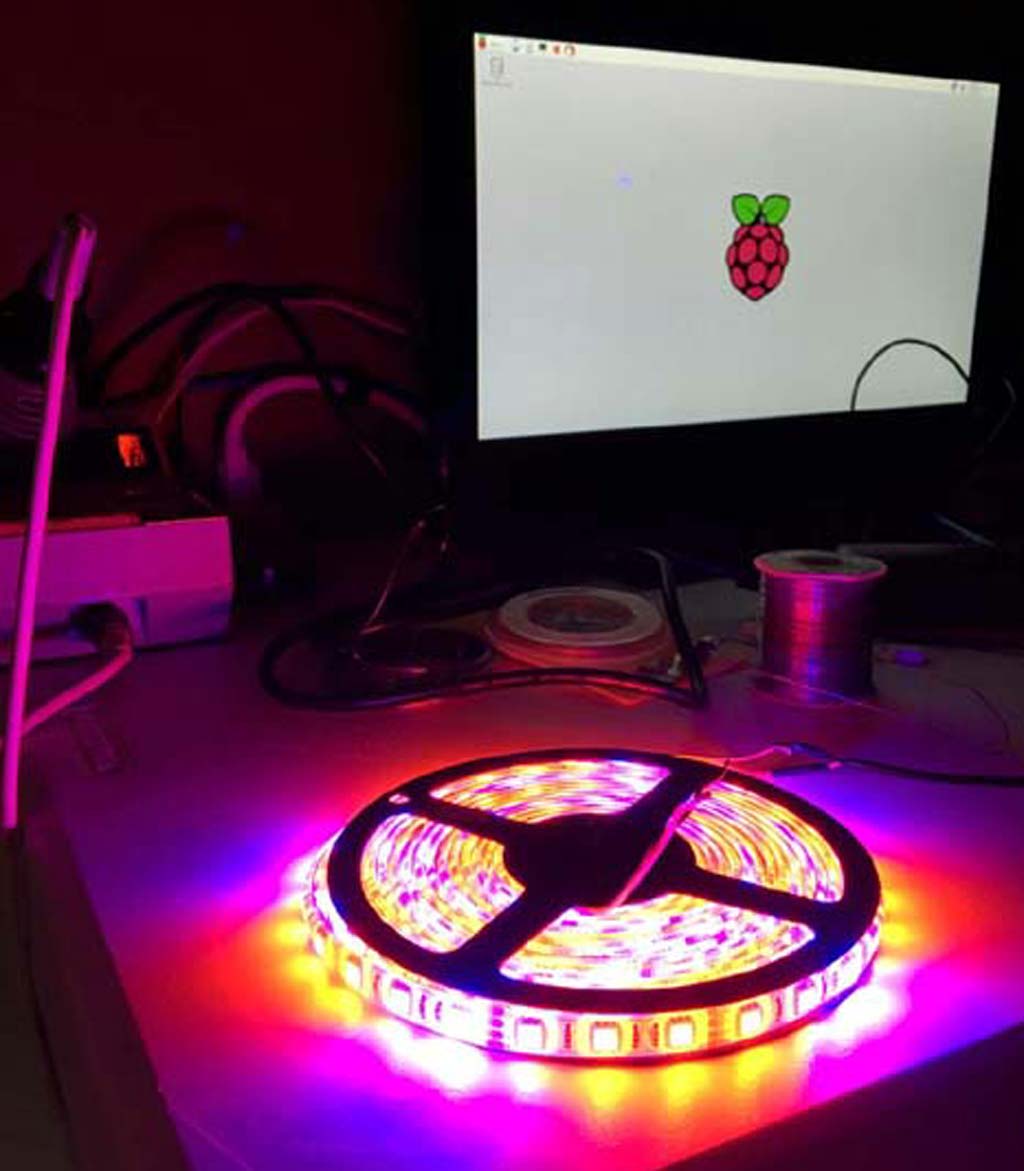
At Lotus AgTech, our journey in controlled environment agriculture (CEA) began with hands-on prototyping to validate core concepts in hydroponics, lighting efficiency, and scalable system design. These early examples with radish microgreens provide real-world data that informed our patented innovations (US11617316B2 for nutrient-solution-cooled LEDs and US12349638B2 for programmable spectral control). Here’s a look at the progression from simple prototypes to scalable production setups.
The Original LED Prototype: Blurple Lighting in Action
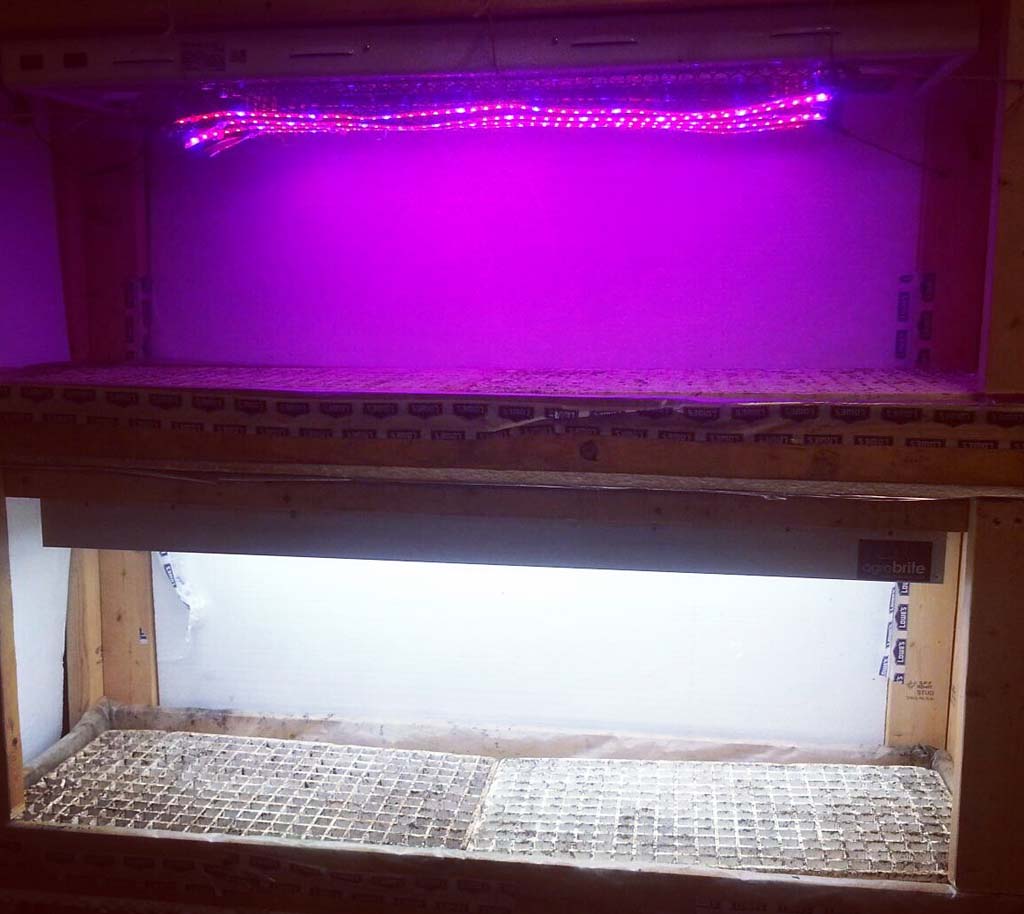
Our first prototype used 60W of blurple (blue/purple) LED grow lights illuminating a compact 15″ x 30″ growing area (approximately 3.125 square feet). This setup featured a basic hydroponic tray with recirculating nutrient solution, demonstrating how targeted full-spectrum LEDs could drive fast, dense growth in microgreens without excessive heat or energy waste.
Control System: Fluorescent Lighting Comparison
For benchmarking, we ran a parallel control with traditional 220W fluorescent lights over the same 15″ x 30″ area. While effective, this setup consumed significantly more power and generated more heat, highlighting the advantages of modern LED technology in efficiency and thermal management—principles later incorporated into our patented cooling method.
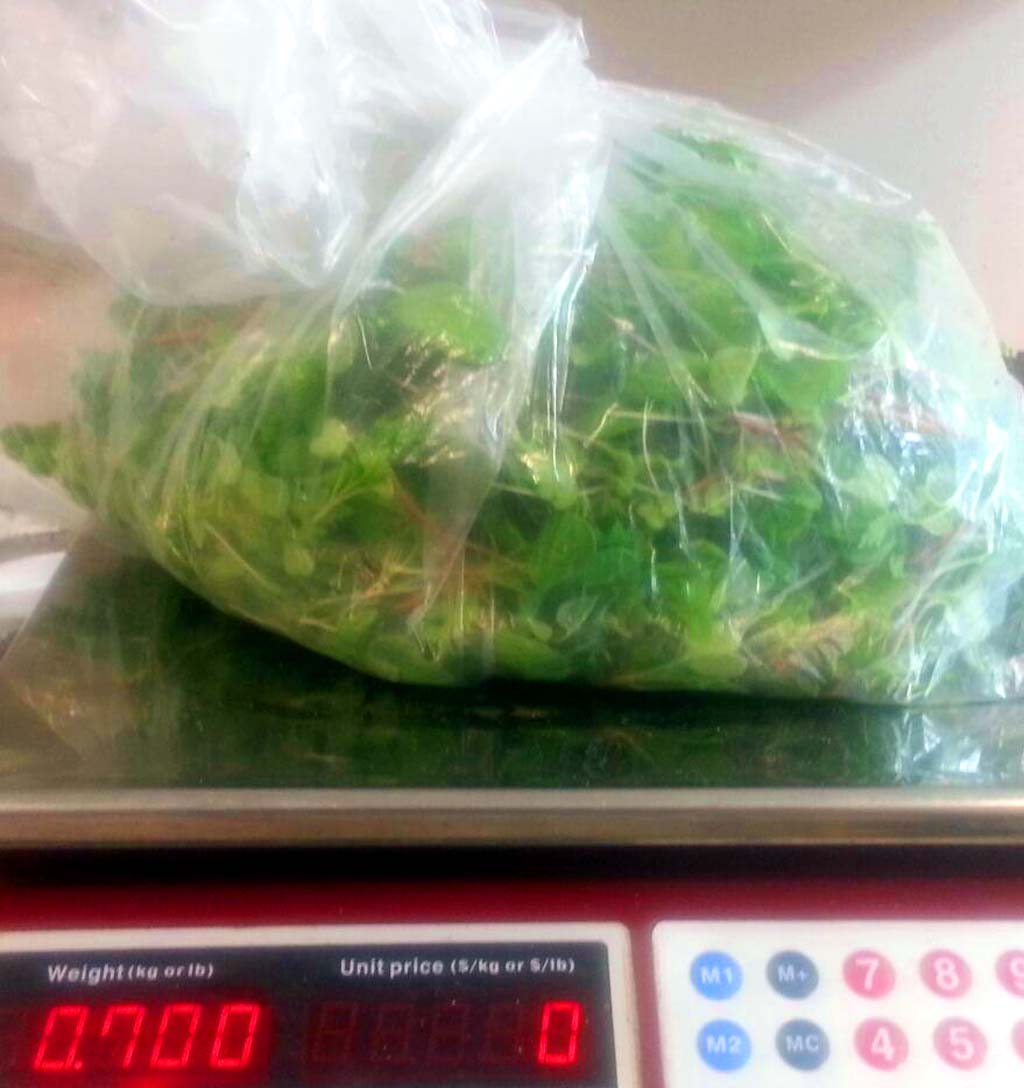
First Harvest Results: 0.7 Pounds of Radish Microgreens
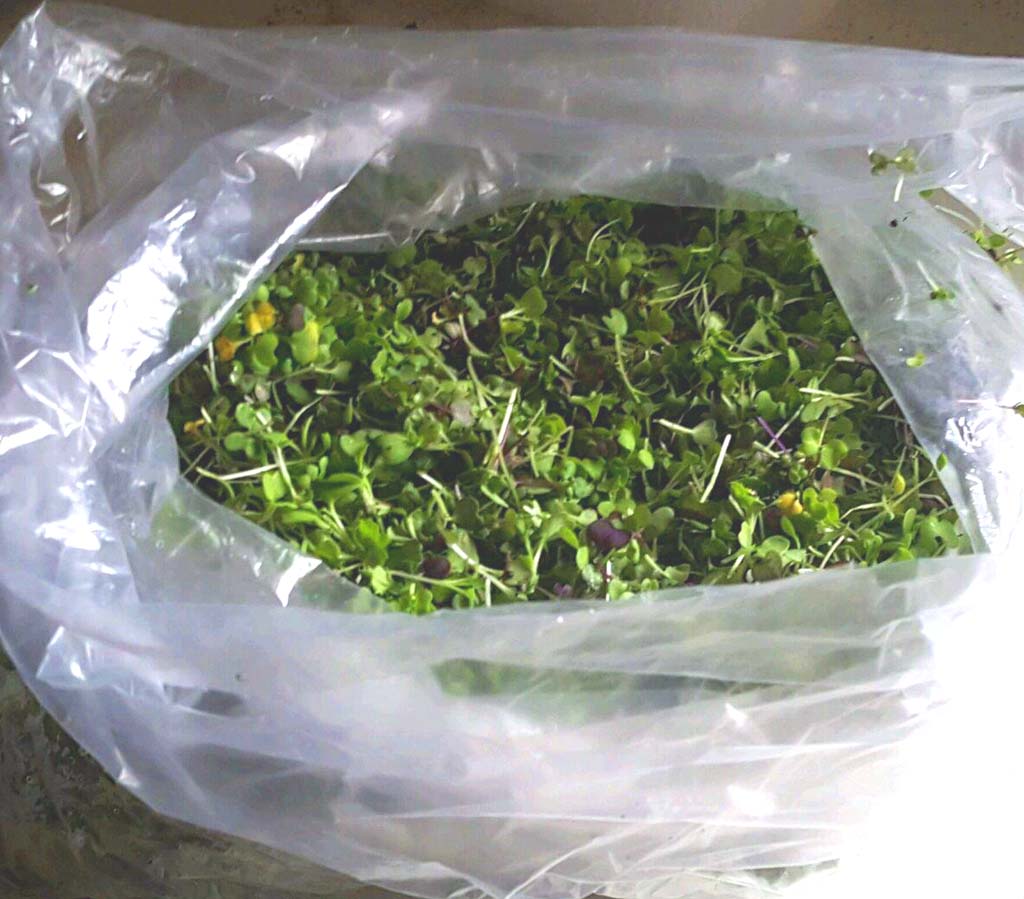
From the LED prototype tray, we achieved a successful first harvest of 0.7 pounds (approximately 318 grams) of vibrant radish microgreens. This yield from just 3.125 sq ft translated to roughly 0.224 pounds per square foot—a strong result for an early test, with peppery flavor and excellent density.
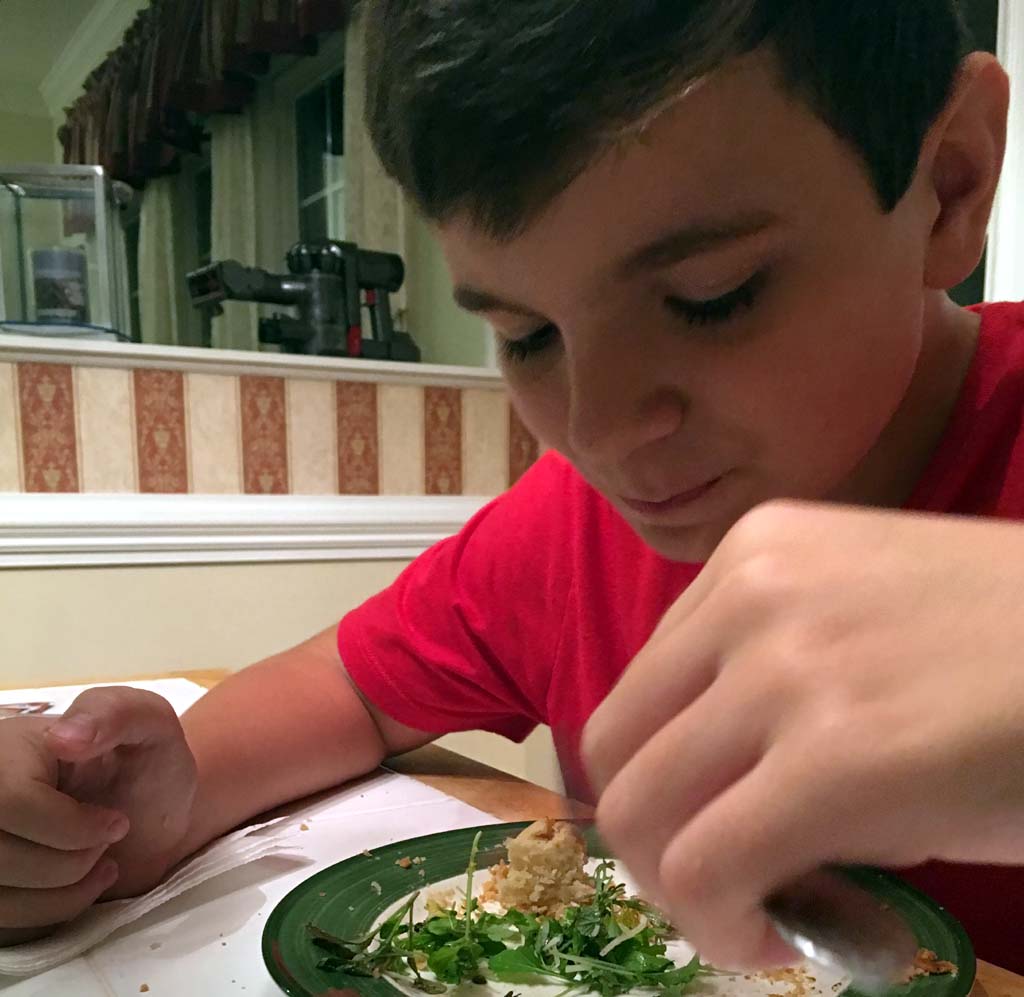
The Taste Test: Fresh and Flavorful Feedback
We conducted informal taste tests to evaluate quality. Participants noted the crisp texture, bold radish spiciness, and overall freshness—key indicators that our lighting and hydroponic approach produced premium microgreens comparable to (or better than) soil-grown varieties.
Scaling Up: Example System with 4 Growing Areas
Building on the prototype success, we designed a modular example system featuring 4 of the 15″ x 30″ growing areas (total ~12.5 sq ft). This configuration could support staggered planting for continuous weekly harvests, ideal for small commercial trials or home-based market supply.
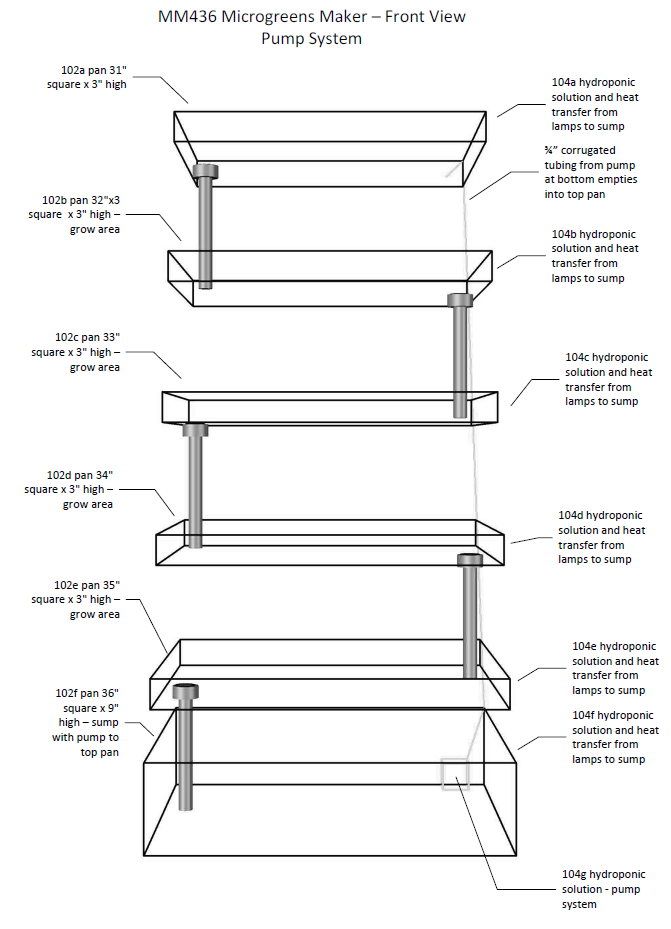
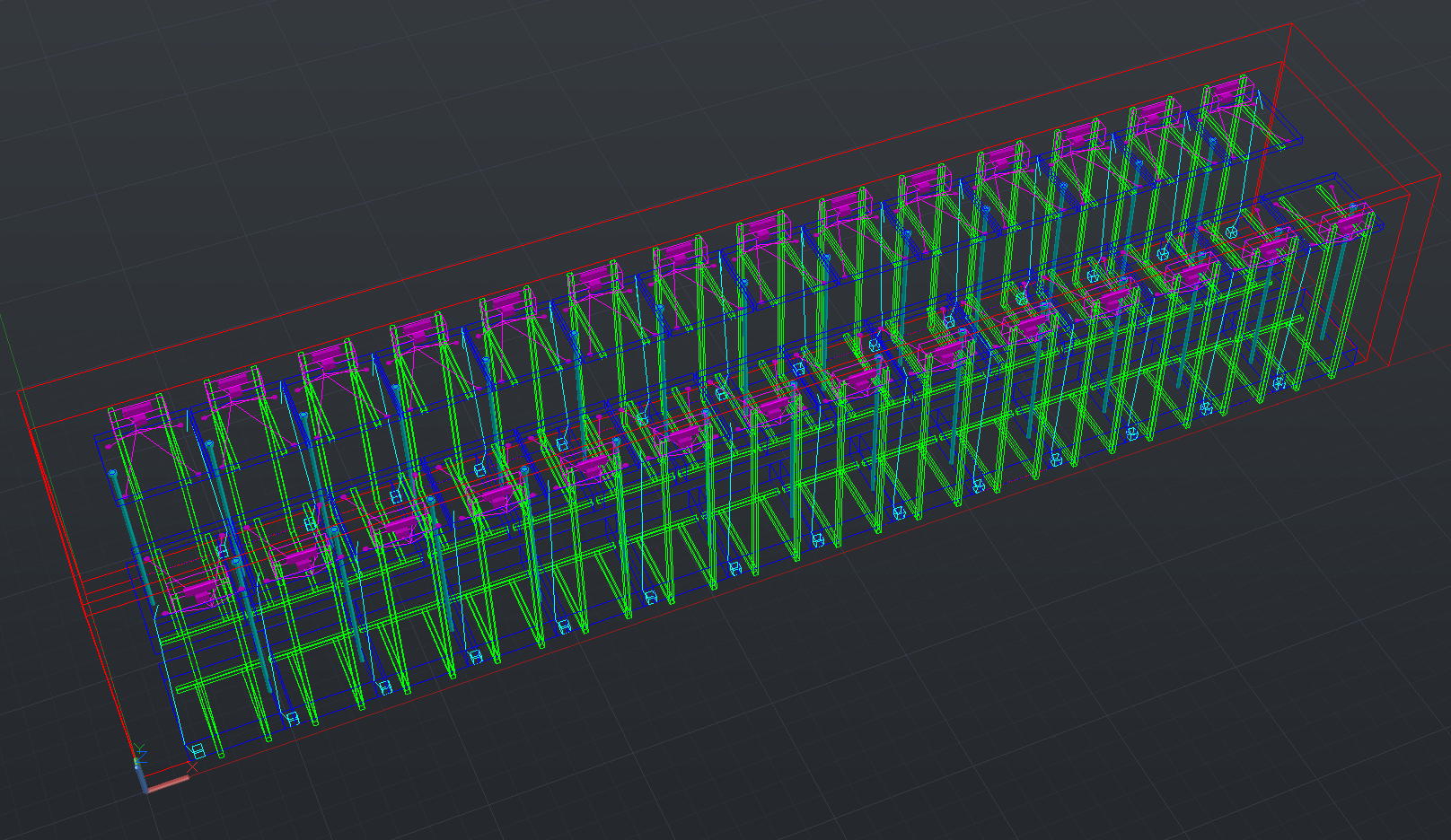
Commercial-Scale Vision: 28 Systems in a 40' Shipping Container
For larger production, consider a full-scale example: 28 systems, each with 4 vertical layers, installed in a standard 40-foot shipping container. This creates a high-density vertical farm with over 100 growing trays (total area equivalent to hundreds of square feet when stacked), capable of producing substantial weekly yields of microgreens or leafy greens. Integrated with our patented LED cooling, spectral programming, AI controls, HVAC, and solar options, this setup demonstrates true scalability for urban or off-grid CEA.
These early data points—from 60W blurple prototypes yielding 0.7 lbs per tray to container-scale visions—laid the foundation for Lotus AgTech’s efficient, patented systems. Whether starting small or aiming for commercial output, real results drive smarter growing.
Ready to replicate or scale these results with our modular platforms?
Grow smarter. Yield more. Lotus AgTech.